
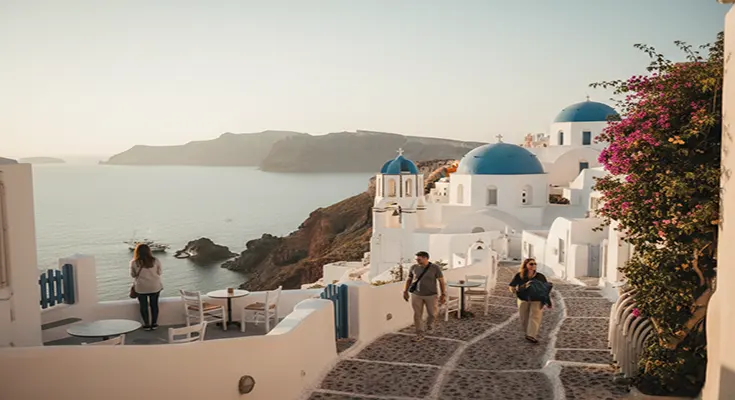
The Mediterranean has long been the world’s playground. From the neon-blue waters of the Amalfi Coast to the white-washed labyrinths of the Greek Isles, its allure is undeniable. However, in recent years, the “European Summer” has become a victim of its own success. “Overtourism” is no longer just a buzzword; it is a reality that results in four-hour queues for museums, local residents being priced out of their homes, and travelers feeling more like sardines than explorers.
The solution is not to stop visiting these historic cradles of civilization, but to change when we visit them. Embracing off-season travel (typically November through March) is the single most impactful way to travel sustainably. It transforms a stressful, high-cost trip into a soulful, authentic, and budget-friendly experience.
Here is why the Mediterranean is actually at its best when the crowds go home.
1. Reclaiming the “Sense of Place”
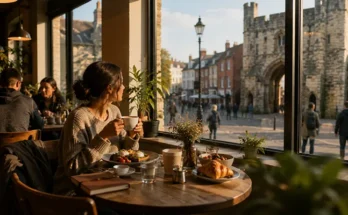
In the height of July, the “sense of place” in cities like Venice, Dubrovnik, or Florence is often buried under a sea of selfie sticks and tour groups. When you visit in the off-season, the city’s true character emerges.
- Local Life Returns: During the summer, many locals flee their own cities to escape the heat and the tourists. In the off-season, the “real” city returns. You’ll see grandmothers chatting in the squares, children playing football in the piazzas, and artisans working in their shops without the pressure of a thousand passersby.
- Quietude and Soundscapes: Have you ever heard the sound of your own footsteps on the cobblestones of a Venetian alley? Or the sound of the wind through the columns of the Parthenon? These auditory experiences are impossible in the high season but are a hallmark of winter travel.
2. Drastic Cost Savings
For the budget-conscious traveler, the off-season is a revelation. The “Seasonal Tax” that inflates prices in the Mediterranean disappears once the leaves start to fall.
| Expense | High Season (June-Aug) | Off-Season (Nov-Feb) | Estimated Savings |
| Airfare | €800 – €1,200 | €400 – €600 | 50% |
| Luxury Hotel | €400/night | €180/night | 55% |
| Car Rental | €70/day | €25/day | 60% |
| Dining | “Tourist Menus” | Standard Local Pricing | 20% |
In cities like Palermo or Athens, five-star boutique hotels that are unreachable in August often drop their rates to the price of a standard mid-range hotel in the winter. Your travel budget stretches twice as far, allowing for longer stays and deeper exploration.
3. The End of the “Queue Culture”
Overtourism is defined by waiting. Waiting for a table, waiting for a ticket, waiting for a photo.
- Instant Access: In the off-season, the Uffizi Gallery in Florence or the Vatican Museums in Rome lose their mile-long lines. You can walk up to iconic works of art and stand before them in silence, rather than being ushered along by a security guard.
- Spontaneous Dining: The “best” restaurants in the Mediterranean often require bookings weeks in advance during the summer. In November, you can often walk into a Michelin-starred trattoria or a hidden local gem and find a table waiting for you. This allows for a much more relaxed, “slow travel” pace.
4. Better Weather for Exploration
While the “sun and sand” crowd might disagree, the Mediterranean summer is increasingly becoming too hot for comfortable urban exploration.
- The Comfort Factor: Walking 15,000 steps through the ruins of Pompeii or the hills of Lisbon in 40°C (104°F) heat is physically grueling. In the off-season, the Mediterranean enjoys a mild, “eternal spring” climate. With temperatures hovering between 12°C and 18°C, you can explore all day without heat exhaustion.
- The Light: For photographers, the winter sun stays lower in the sky, providing a soft, golden light throughout the day, rather than the harsh, vertical shadows of a mid-summer noon.
5. Sustainable Impact: Being a “Good” Tourist
Overtourism puts an immense strain on local infrastructure—water systems, waste management, and public transport. By visiting in the off-season, you are actively helping to solve this crisis.
- Year-Round Income for Locals: Many Mediterranean businesses suffer from “seasonal precariousness,” where they make all their money in three months and struggle for the other nine. By visiting in January, you provide vital income during the lean months, helping local shops and restaurants stay open year-round.
- Reducing Environmental Pressure: Concentrating millions of people into a few square miles in a short timeframe is ecologically damaging. Spreading that footfall throughout the year allows the city to “breathe” and recover.
6. Ideal Off-Season Mediterranean Destinations
Crete, Greece
While the small islands like Santorini mostly “shut down” in winter, Crete is a living, breathing island with a major university and a robust agricultural economy. The weather remains exceptionally mild, and the hiking in the White Mountains is superior when the heat is gone.
Seville, Spain
Seville is famously “the frying pan of Europe” in July. In February, however, the orange trees are heavy with fruit, the scent of orange blossom begins to fill the air, and you can enjoy the Alcázar in peace.
Valletta, Malta
Malta is one of the sunniest places in Europe. Even in December, you can often enjoy lunch outdoors in a t-shirt. Its compact, fortress-city architecture is much easier to appreciate without the cruise ship crowds.
7. Practical Tips for Off-Season Success
- Check Openings: While museums stay open, some coastal “resort” towns (like those on the Amalfi Coast) do largely close for the winter. Stick to hub cities (Naples, Rome, Barcelona, Nice) where life continues regardless of the season.
- Pack Layers: The Mediterranean sun is still strong, but once it sets, the temperature drops. A light down jacket and a scarf are essential.
- Embrace the Festivals: Many of the most authentic Mediterranean festivals happen in the off-season, such as Carnival in Venice or the Feast of Saint Agatha in Catania. These are events for locals, by locals.
The Mediterranean is a region of layers—historical, cultural, and emotional. Overtourism peels away those layers until only a plastic, commercialized version remains. By choosing to travel in the off-season, you are helping to preserve the integrity of these incredible cities while gifting yourself a much richer, calmer, and more affordable experience.
The Mediterranean doesn’t need more tourists in August; it needs more travelers in January.